滑动窗口 无重复字符的最长子串 给定一个字符串 s ,请你找出其中不含有重复字符的最长子串的长度。
示例:
1
2
3
4
5
6
7
8
9
10
11
12
13
14
15
16
17
class Solution {public int lengthOfLongestSubstring (String s) {new HashSet <Character>();int n = s.length(), right = -1 , ans = 0 ;for (int left = 0 ; left < n; ++i) {if (left != 0 ) {1 ));while (right + 1 < n && !occ.contains(s.charAt(right + 1 ))) {1 ));1 );return ans;
当左指针 i 不在起始位置时,集合需要删掉 i前面的字母,然后右指针往后遍历,直到遇到相同字母为止。
找到字符串中的所有字母异位词 给定两个字符串 s 和 p,找到 s 中所有 p 的 异位词 的子串,返回这些子串的起始索引。不考虑答案输出的顺序。
示例:s = "cbaebabacd", p = "abc"[0,6]0 的子串是 "cba", 它是 "abc" 的异位词。6 的子串是 "bac", 它是 "abc" 的异位词。
1
2
3
4
5
6
7
8
9
10
11
12
13
14
15
16
17
18
19
20
21
22
23
class Solution {public List<Integer> findAnagrams (String s, String p) {int sLen = s.length(), pLen = p.length();if (sLen < pLen)return new ArrayList <Integer>();new ArrayList <Integer>();int [] sCount = new int [26 ];int [] pCount = new int [26 ];for (int i = 0 ; i < pLen; ++i) {'a' ];'a' ];if (Arrays.equals(sCount, pCount))0 );for (int i = 0 ; i < sLen - pLen; ++i) {'a' ];'a' ];if (Arrays.equals(sCount, pCount))1 );return ans;
第一个循环用于统计两个字符串中 pLen部分s对应的滑动窗口向右移动一位,更新字母数量数据。最后,如果两个数组一样则表明符合条件。
在该方法的基础上,我们可以不再分别统计两个字串中字母的数量,转而统计每种字母数量的差,并额外引入变量 differ 来记录当前窗口和字符串p中数量不同的字母个数。
1
2
3
4
5
6
7
8
9
10
11
12
13
14
15
16
17
18
19
20
21
22
23
24
25
26
27
28
29
30
31
32
33
34
public List<Integer> findAnagrams (String s, String p) {int sLen = s.length(), pLen = p.length(), temp;if (sLen < pLen) return new ArrayList <Integer>();new ArrayList <Integer>();int [] count = new int [26 ];for (int i = 0 ; i < pLen; ++i) {'a' ];'a' ];int differ = 0 ;for (int j = 0 ; j < 26 ; ++j)if (count[j] != 0 )if (differ == 0 )0 );for (int i = 0 ; i < sLen - pLen; ++i) {'a' ];if (temp == 1 )else if (temp == 0 )'a' ];'a' ];if (temp == -1 )else if (temp == 0 )'a' ];if (differ == 0 )1 );return ans;
其中的count数组存着串s - p的各个字母的差,其中每一个非0项都会让differ + 1。在differ赋值后,开始进行循环。temp变量用于获取当前的差值。首先是将左端划出窗口的情况,需要将differ中包含的情况给出清。然后是将右端划入窗口的情况,需要在differ中增加新差值。而循环体本身则演示滑动的过程。
子串 和为K的子数组 给你一个整数数组 nums 和一个整数 k ,请你统计并返回 该数组中和为 k 的子数组的个数 。
按照提示,使用哈希表进行操作。但哈希表上放什么是个值得考虑的问题,由于前缀和可能一样,所以这里放的是前缀和的值和出现的次数。
1
2
3
4
5
6
7
8
9
10
11
12
13
14
15
class Solution {public int subarraySum (int [] nums, int k) {new HashMap <>();0 , 1 );int sum = 0 ;int count = 0 ;for (int num : nums) {if (map.containsKey(sum - k))0 ) + 1 );return count;
滑动窗口最大值 给你一个整数数组 nums,有一个大小为 k 的滑动窗口从数组的最左侧移动到数组的最右侧。你只可以看到在滑动窗口内的 k 个数字。滑动窗口每次只向右移动一位。滑动窗口中的最大值 。[1 3 -1 -3 5 3 6 7][3 3 5 5 6 7]
滑动窗口的位置
最大值
[1 3 -1] -3 5 3 6 7
3
1 [3 -1 -3] 5 3 6 7
3
1 3 [-1 -3 5] 3 6 7
5
1 3 -1 [-3 5 3] 6 7
5
1 3 -1 -3 [5 3 6] 7
6
1 3 -1 -3 5 [3 6 7]
7
优先队列 维护一个优先队列,初始时,将数组nums的前k个元素放入队列中,每次向右移动窗口是就把一个新的元素放入优先队列中。此时堆顶的元素就是堆中所有元素的最大值,但这个最大值可能并不在窗口中,这时候我们就要移除这个数据
1
2
3
4
5
6
7
8
9
10
11
12
13
14
15
16
17
18
19
20
21
22
23
class Solution {public int [] maxSlidingWindow(int [] nums, int k) {int n = nums.length;int []> pq = new PriorityQueue <int []>(new Comparator <int []>() {public int compare (int [] pair1, int [] pair2) {return pair1[0 ] != pair2[0 ] ? pair2[0 ] - pair1[0 ] : pair2[1 ] - pair1[1 ];for (int i = 0 ; i < k; ++i) {new int []{nums[i], i});int [] ans = new int [n - k + 1 ];0 ] = pq.peek()[0 ];for (int i = k; i < n; ++i) {new int []{nums[i], i});while (pq.peek()[1 ] <= i - k) {1 ] = pq.peek()[0 ];return ans;
单调队列 维护一个双向队列,存储所有还没有被移除的下标。这些下标按照从小到大的顺序存储。
1
2
3
4
5
6
7
8
9
10
11
12
13
14
15
16
17
18
19
20
21
22
23
24
25
26
class Solution {public int [] maxSlidingWindow(int [] nums, int k) {int n = nums.length;new LinkedList <Integer>();for (int i = 0 ; i < k; ++i) {while (!deque.isEmpty() && nums[i] >= nums[deque.peekLast()]) {int [] ans = new int [n - k + 1 ];0 ] = nums[deque.peekFirst()];for (int i = k; i < n; ++i) {while (!deque.isEmpty() && nums[i] >= nums[deque.peekLast()]) {while (deque.peekFirst() <= i - k) {1 ] = nums[deque.peekFirst()];return ans;
最小覆盖子串 给你一个字符串 s 、一个字符串 t 。返回 s 中涵盖 t 所有字符的最小子串。如果 s 中不存在涵盖 t 所有字符的子串,则返回空字符串 "" 。
示例 1:s = "ADOBECODEBANC", t = "ABC""BANC""BANC" 包含来自字符串 t 的 'A'、'B' 和 'C'。
示例 2:s = "a", t = "aa"""t 中两个字符 'a' 均应包含在 s 的子串中,
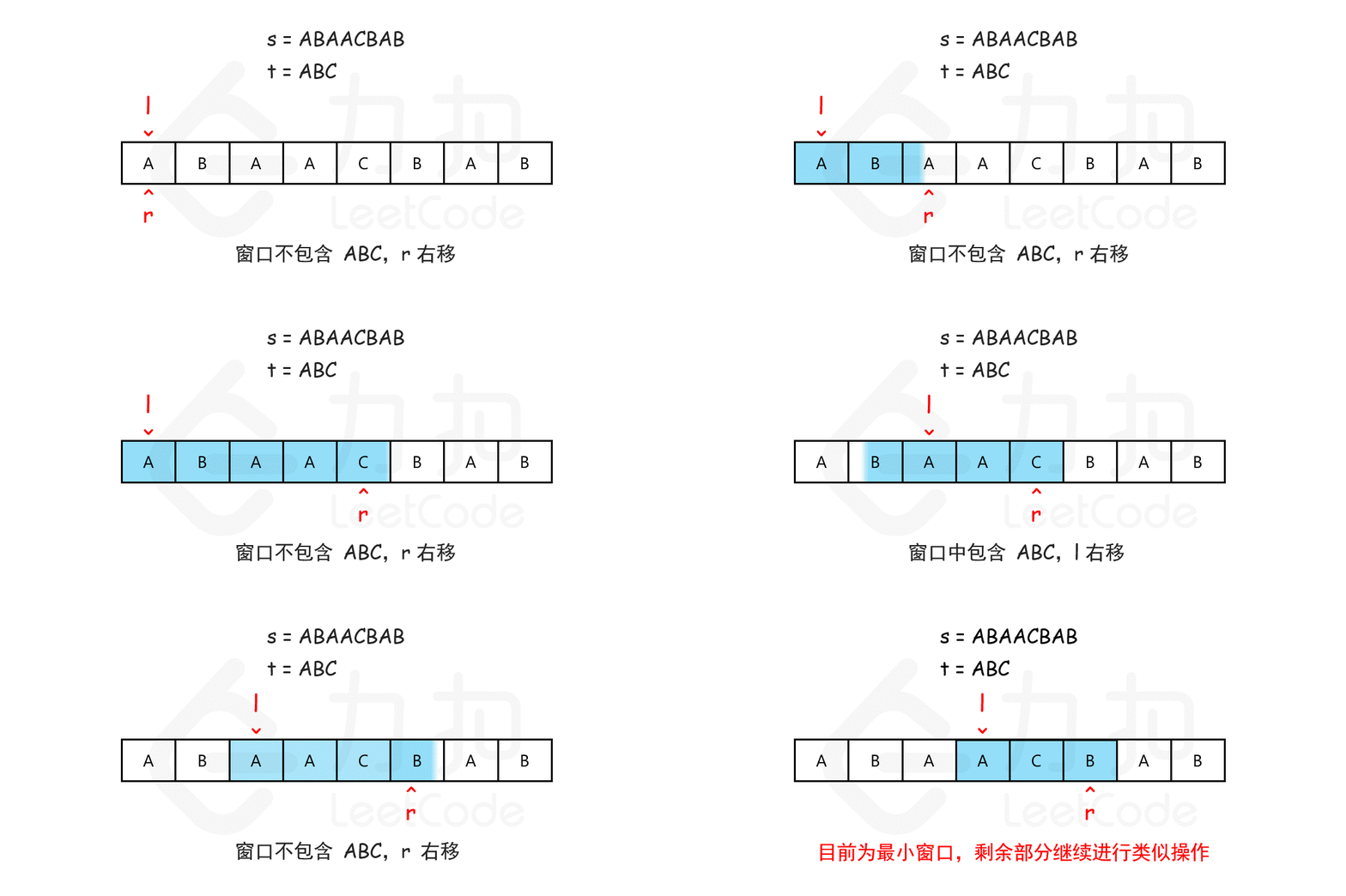
可以使用滑动窗口的方式来解决。维护两个指针,让右指针不断延申直到覆盖t中所有字母。然后让左指针运动,试图缩小范围。
1
2
3
4
5
6
7
8
9
10
11
12
13
14
15
16
17
18
19
20
21
22
23
24
25
26
27
28
29
30
31
32
33
34
35
36
37
38
39
40
41
42
43
44
45
46
class Solution {new HashMap <Character, Integer>();new HashMap <Character, Integer>();public String minWindow (String s, String t) {int tLen = t.length();for (int i = 0 ; i < tLen; i++) {char c = t.charAt(i);0 ) + 1 );int l = 0 , r = -1 ;int len = Integer.MAX_VALUE, ansL = -1 , ansR = -1 ;int sLen = s.length();while (r < sLen) {if (r < sLen && ori.containsKey(s.charAt(r))) {0 ) + 1 );while (check() && l <= r) {if (r - l + 1 < len) {1 ;if (ori.containsKey(s.charAt(l))) {0 ) - 1 );return ansL == -1 ? "" : s.substring(ansL, ansR);public boolean check () {Iterator iter = ori.entrySet().iterator(); while (iter.hasNext()) { Entry entry = (Map.Entry) iter.next(); Character key = (Character) entry.getKey(); Integer val = (Integer) entry.getValue(); if (cnt.getOrDefault(key, 0 ) < val) {return false ;return true ;
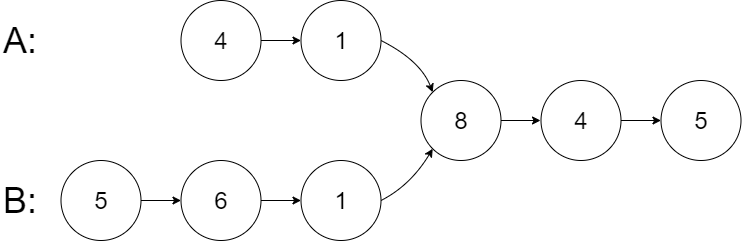
链表 相交链表 给你两个单链表的头节点 headA 和 headB ,请你找出并返回两个单链表相交的起始节点。如果两个链表不存在相交节点,返回 null 。
intersectVal = 8, listA = [4,1,8,4,5], listB = [5,6,1,8,4,5], skipA = 2, skipB = 3Intersected at '8'8 (注意,如果两个链表相交则不能为 0)。从各自的表头开始算起,链表 A 为 [4,1,8,4,5],链表 B 为 [5,6,1,8,4,5]。在 A 中,相交节点前有 2 个节点;在 B 中,相交节点前有 3 个节点。
哈希集合 先将 headA 中的节点加入哈希集合中,再遍历链表 headB,然后将 headB 中的节点与表中的进行比较。
1
2
3
4
5
6
7
8
9
10
11
12
13
14
15
16
17
18
public class Solution {public ListNode getIntersectionNode (ListNode headA, ListNode headB) {new HashSet <ListNode>();ListNode temp = headA;while (temp != null ) {while (temp != null ) {if (visited.contains(temp)) {return temp;return null ;
双指针 先判空,若二者均为非空,则在两个链表头创建两个指针 pA 和 pB。然后每步操作同时更新指针 pA 和 pB,若均不为空则移动到下一节点;一方为空则将该指针放到另一条的头部;指向同一节点则指向该节点;均为空则指向空。
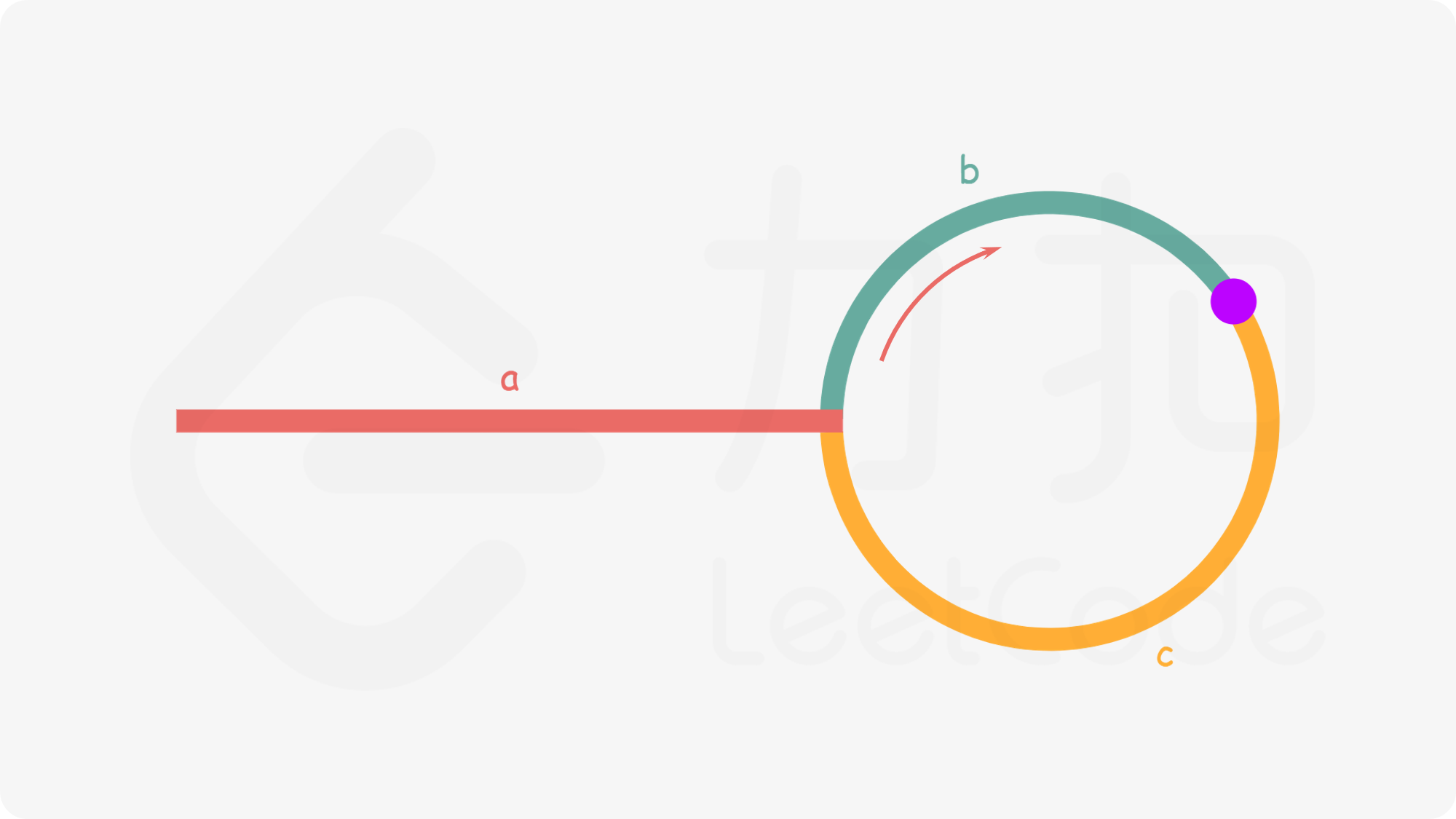
设 headA 不相交部分长度为 $a$,headB 部分不相交部分长度为 $b$,二者相交部分为 $c$。若二者相交,一开始双方会同时走向相交节点(若 $a=b$),或者分别走向链表尾,并走向另一条链表,而后者二者均需走$a+b+c$的长度碰到交汇点。若二者不相交,则在各自走了$a+c+b+c=a+b+2c$的长度下同时走向空值,返回null。
1
2
3
4
5
6
7
8
9
10
11
12
public class Solution {public ListNode getIntersectionNode (ListNode headA, ListNode headB) {if (headA == null || headB == null )return null ;ListNode pA = headA, pB = headB;while (pA != pB) {null ? headB : pA.next;null ? headA : pB.next;return pA;
错的人就算走过了对方的路也还是会错过😔 这题我希望大家都返回true
——某神评
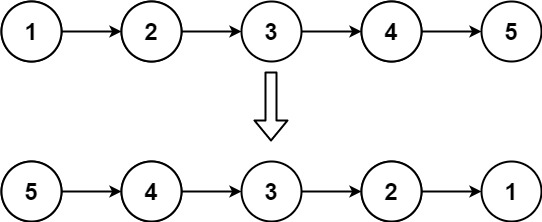
反转链表 给你单链表的头节点 head ,请你反转链表,并返回反转后的链表。
示例:head = [1,2,3,4,5][5,4,3,2,1]
迭代 头插法创建新链表。
1
2
3
4
5
6
7
8
9
10
11
12
13
class Solution {public ListNode reverseList (ListNode head) {ListNode prev = null ; ListNode curr = head; while (curr != null ) {ListNode next = curr.next; return prev;
递归 相比迭代的从头来过,这个只是逆转了箭头的方向
1
2
3
4
5
6
7
8
9
10
11
class Solution {public ListNode reverseList (ListNode head) {if (head == null || head.next == null ) {return head;ListNode newHead = reverseList(head.next);null ;return newHead;
指定区间的情况 (原题: 反转链表 II) 详见视频
1
2
3
4
5
6
7
8
9
10
11
12
13
14
15
16
17
18
19
20
21
22
23
24
25
class Solution {public ListNode reverseBetween (ListNode head, int left, int right) {ListNode dummy = new ListNode (0 , head);ListNode p0 = dummy;for (int i = 0 ; i < left - 1 ; i++) {ListNode pre = null ; ListNode cur = p0.next; for (int i = 0 ; i < right - left + 1 ; i++) {ListNode nxt = cur.next;return dummy.next;
回文链表 给你一个单链表的头节点 head ,请你判断该链表是否为回文链表。如果是,返回 true ;否则,返回 false 。head = [1,2,2,1]true
C++摆烂版,全部用栈。压一半,奇数个弹出中间那个,再比较一半。虽然比较慢但是很好懂(废话)
1
2
3
4
5
6
7
8
9
10
11
12
13
14
15
16
17
18
19
20
21
class Solution {public :bool isPalindrome (ListNode* head) int counter = 0 ;int > s;for (ListNode *pointer = head; pointer != nullptr ; pointer = pointer->next, counter++);for (int i = 0 ; i < counter / 2 ; temp = temp->next, i++)push (temp->val);if (counter % 2 )for (;temp != nullptr && !s.empty (); temp = temp->next)if (s.top () != temp->val)return false ;else pop ();if (!s.empty ())return false ;return true ;
将值复制到数组中后用双指针法 1 2 3 4 5 6 7 8 9 10 11 12 13 14 15 class Solution {public boolean isPalindrome (ListNode head) {new ArrayList <Integer>();int front = 0 , back = vals.size() - 1 ; for (ListNode node = head; node != null ; node = node.next)while (front < back) {if (!vals.get(front).equals(vals.get(back)))return false ;return true ;
顾名思义,这里不分析了,太狂暴了。
递归 该方法可以以一种优雅的形式解决单向链表不能倒查的问题。
1 2 3 4 5 6 7 8 9 10 11 12 13 14 15 16 17 18 19 class Solution {private ListNode frontPointer;private boolean recursivelyCheck (ListNode currentNode) {if (currentNode != null ) {if (!recursivelyCheck(currentNode.next))return false ;if (currentNode.val != frontPointer.val)return false ;return true ;public boolean isPalindrome (ListNode head) {return recursivelyCheck(head);
frontPointer变量存储前面的值,递归的 currentNode 部分存储后面的值。若前面的false则传递下去,若二者值不相等也返回false。frontPointer通过next赋值实现迭代,currentNode部分通过递归的返回部分实现往回迭代。
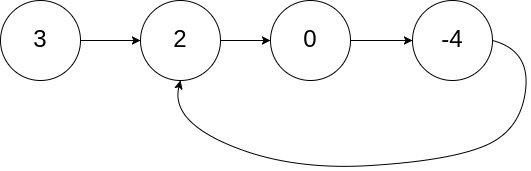
环形链表 给你一个链表的头节点 head ,判断链表中是否有环。
如果链表中有某个节点,可以通过连续跟踪 next 指针再次到达,则链表中存在环。 为了表示给定链表中的环,评测系统内部使用整数 pos 来表示链表尾连接到链表中的位置(索引从 0 开始)。注意:pos 不作为参数进行传递 。仅仅是为了标识链表的实际情况。
如果链表中存在环 ,则返回 true 。 否则,返回 false 。
示例:head = [3,2,0,-4], pos = 1true
哈希表 1 2 3 4 5 6 7 8 9 10 11 public class Solution {public boolean hasCycle (ListNode head) {new HashSet <ListNode>();while (head != null ) {if (!seen.add(head))return true ;return false ;
如果加不了就是已经加过了,遇到环了。
快慢指针 此方法又叫 “Floyd判图算法”,又叫龟兔赛跑算法。快指针一次两步,慢指针一次一步。若无环则慢指针永远碰不上快指针;若有环则二者都会在环路中转圈,当二者路程差刚好是环长度的倍数时就是二者相遇的时候。
1 2 3 4 5 6 7 8 9 10 11 12 13 14 public class Solution {public boolean hasCycle (ListNode head) {if (head == null || head.next == null )return false ;ListNode slow = head, fast = head.next;while (slow != fast) {if (fast == null || fast.next == null )return false ;return true ;
环形链表II 给定一个链表的头节点 head ,返回链表开始入环的第一个节点。 如果链表无环,则返回 null。
如果链表中有某个节点,可以通过连续跟踪 next 指针再次到达,则链表中存在环。 注意:此处的pos 不作为参数进行传递,仅仅是为了标识链表的实际情况。
示例:head = [3,2,0,-4], pos = 1
可以把上一题的哈希表法改一改
1 2 3 4 5 6 7 8 9 10 11 public class Solution {public boolean hasCycle (ListNode head) {new HashSet <ListNode>();while (head != null ) {if (!seen.add(head))return true ;return false ;
用快慢指针改一改同样能实现定位环的效果。
设slow指针走了 b 距离与 fast 相遇,此时,fast指针已经走了n圈,此时快指针走过的总距离为
$$
由于$v_{fast}=2v_{slow}$,因此有
$${\text{快指针}}=\underbrace{2(a+b)} {\text{慢指针}}⟹a=c+(n−1)(b+c)
但对于指针而言,绕圈圈数可以忽略。因此最后简化成
$$
于是,在二者相遇时,我们再用一个指针指向头部,并与slow指针同步走动,二者相遇的位置即是环开始点。
1 2 3 4 5 6 7 8 9 10 11 12 13 14 15 16 17 18 19 20 21 class Solution {public :while (fast != nullptr) {if (fast->next == nullptr)return nullptr;if (fast == slow) {while (ptr != slow) {return ptr;return nullptr;
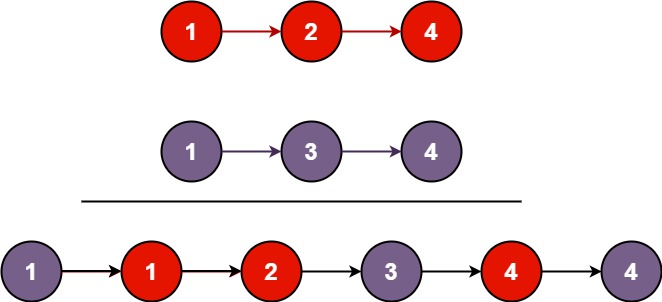
合并两个有序链表 将两个升序链表合并为一个新的 升序 链表并返回。新链表是通过拼接给定的两个链表的所有节点组成的。
示例:
可以把链表2合并到链表1上。
1 2 3 4 5 6 7 8 9 10 11 12 13 14 15 16 17 18 19 20 21 22 23 24 25 26 27 28 29 30 31 32 33 34 35 36 class Solution public :ListNode *mergeTwoLists (ListNode *list1, ListNode *list2) {if (list1 == nullptr || list2 == nullptr )return list1 == nullptr ? list2 : list1;if (list2->val < list1->val)while (swap->next != nullptr && swap->next->val < list1->val)for (ListNode *p = list1; p->next != nullptr && temp != nullptr ; p = p->next)if (temp != nullptr && temp->val >= p->val && temp->val <= p->next->val)if (temp != nullptr )for (; p->next != nullptr ; p = p->next);return head;
指定两个指针p1和p2,分别指向两个链表。若p2 >= p1,则说明是时候插入了,于是在p1->next处进行插入。然后对余下部分循环插入。
递归 定义两个链表的merge操作如下(忽略空链表的情况)
$$
也就是说,两个链表头部值较小的一个节点与剩下元素的 merge 操作结果合并。
1 2 3 4 5 6 7 8 9 10 11 12 13 14 15 class Solution {public ListNode mergeTwoLists (ListNode l1, ListNode l2) {if (l1 == null ) {return l2;else if (l2 == null ) {return l1;else if (l1.val < l2.val) {return l1;else {return l2;
哪个值更小,就把哪个放进递归里面,当最后返回时,已经帮排好序了。
迭代 1 2 3 4 5 6 7 8 9 10 11 12 13 14 15 16 17 18 class Solution {public ListNode mergeTwoLists (ListNode l1, ListNode l2) {ListNode prehead = new ListNode (-1 );ListNode prev = prehead;while (l1 != null && l2 != null ) {if (l1.val <= l2.val) {else {null ? l2 : l1;return prehead.next;
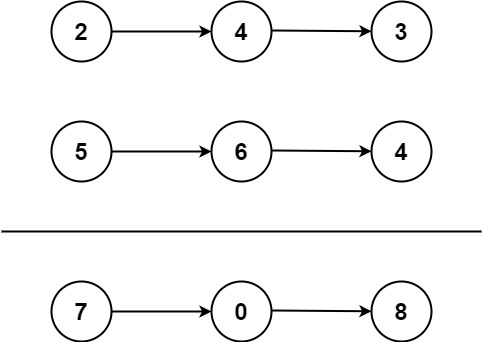
两数相加 给你两个 非空 的链表,表示两个非负的整数。它们每位数字都是按照 逆序 的方式存储的,并且每个节点只能存储 一位 数字。0 之外,这两个数都不会以 0 开头。
示例:l1 = [2,4,3], l2 = [5,6,4][7,0,8]342 + 465 = 807.
这个和数电的ALU计算器类似,一位位计算他们的值并存储进位。以下是题解的模拟法
1 2 3 4 5 6 7 8 9 10 11 12 13 14 15 16 17 18 19 20 21 22 23 24 25 26 class Solution {public :int carry = 0 ;while (l1 || l2) {int n1 = l1 ? l1->val: 0 ;int n2 = l2 ? l2->val: 0 ;int sum = n1 + n2 + carry;if (!head)new ListNode (sum % 10 );else {new ListNode (sum % 10 );10 ;if (l1)if (l2)if (carry > 0 )new ListNode (carry);return head;
确实是比自己写的简洁。
删除链表的倒数第N个节点 给你一个链表,删除链表的倒数第 n 个结点,并且返回链表的头结点。head = [1,2,3,4,5], n = 2[1,2,3,5]
题目的提示给得很明显了,可以使用双指针,让两个指针之间的距离保持n步。然后慢指针就是要删去的值。
题解如下
1 2 3 4 5 6 7 8 9 10 11 12 13 14 15 16 17 18 19 20 21 22 class Solution {public ListNode removeNthFromEnd (ListNode head, int n) {ListNode dummy = new ListNode (0 , head);int length = getLength(head);ListNode cur = dummy;for (int i = 1 ; i < length - n + 1 ; ++i) {ListNode ans = dummy.next;return ans;public int getLength (ListNode head) {int length = 0 ;while (head != null ) {return length;
又臭又长,不如看看我这个
1 2 3 4 5 6 7 8 9 10 11 12 class Solution {public ListNode removeNthFromEnd (ListNode head, int n) {ListNode p1 = head, p2 = head;int length;for (length = 0 ; p1 != null ; p1 = p1.next, length++)if (length == n)return head.next;return head;
在遍历的时候顺便把长度算出来就行了。
两两交换链表中的节点 给你一个链表,两两交换其中相邻的节点,并返回交换后链表的头节点。你必须在不修改节点内部的值的情况下完成本题(即,只能进行节点交换)。
示例:head = [1,2,3,4][2,1,4,3]
迭代 1 2 3 4 5 6 7 8 9 10 11 12 13 14 15 16 class Solution {public ListNode swapPairs (ListNode head) {ListNode dummyHead = new ListNode (0 );ListNode temp = dummyHead;while (temp.next != null && temp.next.next != null ) {ListNode node1 = temp.next;ListNode node2 = temp.next.next;return dummyHead.next;
当然也可以不声明这个头节点,让head专事专办也可以
1 2 3 4 5 6 7 8 9 10 11 12 13 14 15 16 17 18 class Solution {public ListNode swapPairs (ListNode head) {if (head == null || head.next == null )return head;ListNode left = head, right = head.next, front = head, ans = right;while (front.next != null && front.next.next != null ) {return ans;
K个一组翻转链表 给你链表的头节点 head ,每 k 个节点一组进行翻转,请你返回修改后的链表。k 是一个正整数,它的值小于或等于链表的长度。如果节点总数不是 k 的整数倍,那么请将最后剩余的节点保持原有顺序。
示例:head = [1,2,3,4,5], k = 2[2,1,4,3,5]
中间是逆转链表 的过程,只要放个循环就行. 详见视频
1 2 3 4 5 6 7 8 9 10 11 12 13 14 15 16 17 18 19 20 21 22 23 24 25 26 27 28 29 30 31 class Solution {public ListNode reverseKGroup (ListNode head, int k) {int n = 0 ;for (ListNode cur = head; cur != null ; cur = cur.next) {ListNode dummy = new ListNode (0 , head);ListNode p0 = dummy;ListNode pre = null ; ListNode cur = p0.next; for (; n >= k; n -= k) {for (int i = 0 ; i < k; i++) {ListNode nxt = cur.next;ListNode next = p0.next;return dummy.next;
随机链表的复制 给你一个长度为 n 的链表,每个节点包含一个额外增加的随机指针 random ,该指针可以指向链表中的任何节点或空节点。深拷贝 。 深拷贝应该正好由 n 个 全新 节点组成,其中每个新节点的值都设为其对应的原节点的值。新节点的 next 指针和 random 指针也都应指向复制链表中的新节点,并使原链表和复制链表中的这些指针能够表示相同的链表状态。复制链表中的指针都不应指向原链表中的节点 。X 和 Y 两个节点,其中 X.random --> Y 。那么在复制链表中对应的两个节点 x 和 y ,同样有 x.random --> y 。
提示中显示的做法是在原链表每个节点后面新建一个节点,这样就可以直接复制原节点的random值了。
题解的做法如下
1 2 3 4 5 6 7 8 9 10 11 12 13 14 15 16 17 18 19 20 21 22 23 class Solution {public Node copyRandomList (Node head) {if (head == null ) {return null ;for (Node node = head; node != null ; node = node.next.next) {Node nodeNew = new Node (node.val);for (Node node = head; node != null ; node = node.next.next) {Node nodeNew = node.next;null ) ? node.random.next : null ;Node headNew = head.next;for (Node node = head; node != null ; node = node.next) {Node nodeNew = node.next;null ) ? nodeNew.next.next : null ;return headNew;
排序链表 给好链表头结点,对链表进行排序
自顶向下归并排序 找到链表的中点,以中点为分界,将链表拆分为两个子链表,对两个子链表进行排序,最后按照上一道题 的方法合并链表。当然拆分过程可以递归实现
1 2 3 4 5 6 7 8 9 10 11 12 13 14 15 16 17 18 19 20 21 22 23 24 25 26 27 28 29 30 31 32 33 34 35 36 37 38 39 40 41 42 43 44 45 46 47 48 49 class Solution {public ListNode sortList (ListNode head) {return sortList(head, null );public ListNode sortList (ListNode head, ListNode tail) {if (head == null ) {return head;if (head.next == tail) {null ;return head;ListNode slow = head, fast = head;while (fast != tail) {if (fast != tail) {ListNode mid = slow;ListNode list1 = sortList(head, mid);ListNode list2 = sortList(mid, tail);ListNode sorted = merge(list1, list2);return sorted;public ListNode merge (ListNode head1, ListNode head2) {ListNode dummyHead = new ListNode (0 );ListNode temp = dummyHead, temp1 = head1, temp2 = head2;while (temp1 != null && temp2 != null ) {if (temp1.val <= temp2.val) {else {if (temp1 != null ) {else if (temp2 != null ) {return dummyHead.next;
自底向上归并排序
用subLength表示每次需要排序的子链表长度,初始时subLength = 1
每次将链表拆分成若干个长度为subLength的子链表,按照每两个子链表一组进行合并,合并方法仍然是这个
重复上面的步骤
1 2 3 4 5 6 7 8 9 10 11 12 13 14 15 16 17 18 19 20 21 22 23 24 25 26 27 28 29 30 31 32 33 34 35 36 37 38 39 40 41 42 43 44 45 46 47 48 49 50 51 52 53 54 55 56 57 58 59 60 61 62 class Solution {public ListNode sortList (ListNode head) {if (head == null ) {return head;int length = 0 ;ListNode node = head;while (node != null ) {ListNode dummyHead = new ListNode (0 , head);for (int subLength = 1 ; subLength < length; subLength <<= 1 ) {ListNode prev = dummyHead, curr = dummyHead.next;while (curr != null ) {ListNode head1 = curr;for (int i = 1 ; i < subLength && curr.next != null ; i++) {ListNode head2 = curr.next;null ;for (int i = 1 ; i < subLength && curr != null && curr.next != null ; i++) {ListNode next = null ;if (curr != null ) {null ;ListNode merged = merge(head1, head2);while (prev.next != null ) {return dummyHead.next;public ListNode merge (ListNode head1, ListNode head2) {ListNode dummyHead = new ListNode (0 );ListNode temp = dummyHead, temp1 = head1, temp2 = head2;while (temp1 != null && temp2 != null ) {if (temp1.val <= temp2.val) {else {if (temp1 != null ) {else if (temp2 != null ) {return dummyHead.next;
LRU缓存 请你设计并实现一个满足 LRU (最近最少使用) 缓存约束的数据结构。
LRUCache(int capacity) 以 正整数 作为容量 capacity 初始化 LRU 缓存int get(int key) 如果关键字 key 存在于缓存中,则返回关键字的值,否则返回 -1 。void put(int key, int value) 如果关键字 key 已经存在,则变更其数据值 value ;如果不存在,则向缓存中插入该组 key-value 。如果插入操作导致关键字数量超过 capacity ,则应该 逐出 最久未使用的关键字。
函数 get 和 put 必须以 $O(1)$ 的平均时间复杂度运行。
难点是必需要在$O(1)$时间复杂度做好get和put操作。这就要求不能用数组之类的结构了,使用双向链表明显是最便捷的:用链表的位置表明最近的使用情况。当达到容量大小时直接删除末位的链表即可。而链表的查找可以交给哈希表解决。get或put操作时,该缓存块被使用,因此需要把该节点运到头节点处,这也是最难办的部分。
此处将其分为两个部分:要么尾部没有节点,要么尾部有节点。
合并K个排序链表 给你一个链表数组,每个链表都已经按升序排列。
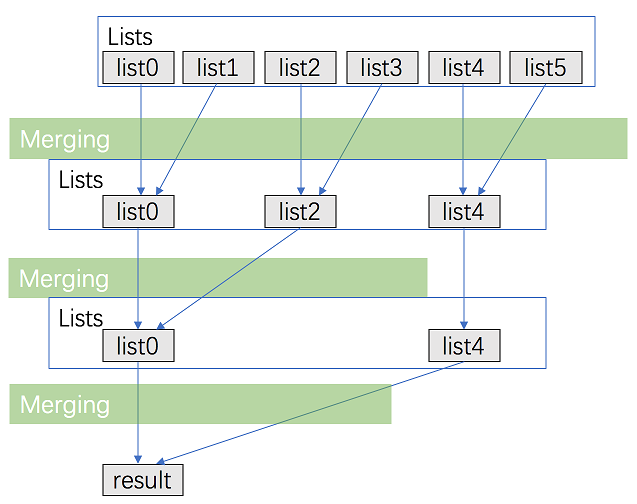
以前面的题目为基础 ,可以一个个链表合并。更快的办法是用分治的办法进行合并。在第一轮合并后,$k$个链表被合并为了$k/2$和链表,以此类推,直到只剩一条
1 2 3 4 5 6 7 8 9 10 11 12 13 14 15 16 17 18 19 20 21 22 23 24 25 26 27 28 29 30 31 32 33 class Solution {class Status implements Comparable <Status> {int val;int val, ListNode ptr) {this .val = val;this .ptr = ptr;public int compareTo (Status status2) {return this .val - status2.val;new PriorityQueue <Status>();public ListNode mergeKLists (ListNode[] lists) {for (ListNode node: lists)if (node != null )new Status (node.val, node));ListNode head = new ListNode (0 );ListNode tail = head;while (!queue.isEmpty()) {Status f = queue.poll();if (f.ptr.next != null )new Status (f.ptr.next.val, f.ptr.next));return head.next;